Fostering a Reading Culture in Schools
This particular topic really resonates with me as part of the challenge that I found while I worked in China was getting the students excited about reading... in ENGLISH. The interest in reading among our high school students was already much lower than what I had witnessed when I was their age, and coupled with the fact that English is not their native language, the reading culture at the school was very sparse. As a staff we struggled quite a bit on coming up with solutions for how to promote reading and literacy at the school.
One of our solutions was performing reading assessments on our students to help them be better-informed about their reading level. While Parrott argues that knowing their reading level can "disempower young readers" as "student choice is a huge part of reading motivation" (2017), we found that part of the reason our students were disengaged and disinterested in what they were reading is due to the simple fact that they were choosing books that were much too difficult for them. Many of the students in my homeroom class were struggling to get through books like Pride & Prejudice; after I completed the reading assessment on them, I found that the average student in my homeroom read at a Grade 3 reading level. It is only natural that students would struggle if they aren't able to choose books that they can understand.
Another solution that we came up with was getting the teachers on board with reading. Students were much more likely to engage with reading if they see their teachers modelling a love for reading and literacy. While I was a teacher at this school, I always strove to read during silent reading along with my students. The TL at the school also came up with a brilliant idea of putting up a "What are Teachers Reading?" display on the bulletin board outside of the library. I often caught students looking at this bulletin display, especially when the TL would change the books on a monthly basis.
A huge obstacle to overcome with ELL students is teaching them the appropriate reading strategies to help them understand what they are reading, as well as giving them opportunities to build their vocabularies to engage in literacy. Last week, I mentioned that part of my inquiry for this course is to look at how makerspaces can help improve literacy - at this point, I'm reminded of the importance of multi-modal texts to be able to give ELL students the opportunity to improve their literacy. Both Bull et al. and Fleming talked about the importance of giving students a variety of multimedia texts and resources to help them inquire, analyze, and critique what they are reading. I think the same thing holds true of what we ask them to read. With ELL students, I tend to give students a variety of multimedia texts to help them better understand the text we are reading. For example, during the unit on Romeo and Juliet, I showed them various movie versions of famous scenes from the play. This allowed them to fully visualize the scenes that they were reading in the book, and also offered discussion as to the various artistic directions and liberties that the directors took with Shakespeare's classic work.
Something else that we tried (and I'm still debating about whether or not it is a successful initiative) is what we've dubbed a "Reading Mob Day." During the month leading up to this day (which we have set in May, as this happens to be our English Arts Festival month where we promote a love for English literacy), every student in the school is tasked with creating an original story. These are not long, typically one page, that students would need to write, edit, and illustrate themselves. Many students saw this as extra work and were not motivated to complete this. However, the intentions behind this initiative is a good one - the goal was to create age-appropriate English reading material for the adjoining elementary school. On Reading Mob Day, students from the high school division would go to their buddy elementary school class and read them the stories that they created, and thereby promoting a reading culture within the school. The two times we have tried this, however, while mostly successful, still had lots of logistics problems and a general lack of motivation and unwillingness from the students to participate in this initiative. Personally, I really don't think it's the best way to promote reading in an ELL school.
At the end of the day, it is still most important to have students read something that they like. Neil Gaiman argues that "well-meaning adults can easily destroy a child's love of reading" (2013), and I would agree with that. Students need to have the agency over what they are reading and how they want to read, in addition to having the motivation to read. E-books and audiobooks, I find, are great for engaging reluctant readers as it allows them to add another layer of depth into their reading experience. And really, it could also be just as simple as having students see the reasons why other children read for them to realize that reading is not "unpleasant" or "uncool" (Gaiman, 2013).
References
Bull, G., Schmidt-Crawford, D.A., McKenna, M.C., & Cohoon, J. (2017, November 10). Storymaking: Combining making and storytelling into a school makerspace. Theory into Practice, 56(4), 271-281.
Du Toit, A. (2017). What is Ms. Chang Reading? [Poster].
Fleming, L. (2014, September). Literacy in the making. Reading Today, 28-29. Retrieved from http://hivenyc.org/wp-content/uploads/LauraFleming_Maker-Movement.pdf
Gaiman, N. (2013, October 15). Why our future depends on libraries, reading and daydreaming. The Guardian. Retrieved from https://www.theguardian.com/books/2013/oct/15/neil-gaiman-future-libraries-reading-daydreaming
Parrott, K. (2017, August 28). Thinking outside the bin: Why labeling books by reading level disempower young readers. School Library Journal. Retrieved from https://www.slj.com/?detailStory=thinking-outside-the-bin-why-labeling-books-by-reading-level-disempowers-young-readers
Scholastic [Scholastic]. (2015, July 23). Kids Tell Us: "Why I Read" [YouTube]. Retrieved from https://www.youtube.com/watch?v=3krHQmOsR44
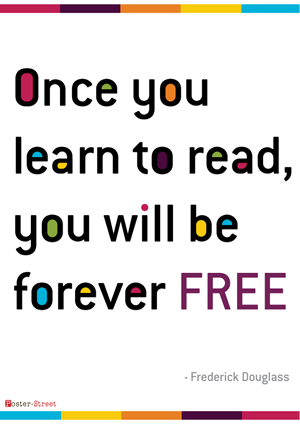 |
| Poster-Street.com (2018) |
One of our solutions was performing reading assessments on our students to help them be better-informed about their reading level. While Parrott argues that knowing their reading level can "disempower young readers" as "student choice is a huge part of reading motivation" (2017), we found that part of the reason our students were disengaged and disinterested in what they were reading is due to the simple fact that they were choosing books that were much too difficult for them. Many of the students in my homeroom class were struggling to get through books like Pride & Prejudice; after I completed the reading assessment on them, I found that the average student in my homeroom read at a Grade 3 reading level. It is only natural that students would struggle if they aren't able to choose books that they can understand.
 |
| Du Toit (2017) |
A huge obstacle to overcome with ELL students is teaching them the appropriate reading strategies to help them understand what they are reading, as well as giving them opportunities to build their vocabularies to engage in literacy. Last week, I mentioned that part of my inquiry for this course is to look at how makerspaces can help improve literacy - at this point, I'm reminded of the importance of multi-modal texts to be able to give ELL students the opportunity to improve their literacy. Both Bull et al. and Fleming talked about the importance of giving students a variety of multimedia texts and resources to help them inquire, analyze, and critique what they are reading. I think the same thing holds true of what we ask them to read. With ELL students, I tend to give students a variety of multimedia texts to help them better understand the text we are reading. For example, during the unit on Romeo and Juliet, I showed them various movie versions of famous scenes from the play. This allowed them to fully visualize the scenes that they were reading in the book, and also offered discussion as to the various artistic directions and liberties that the directors took with Shakespeare's classic work.
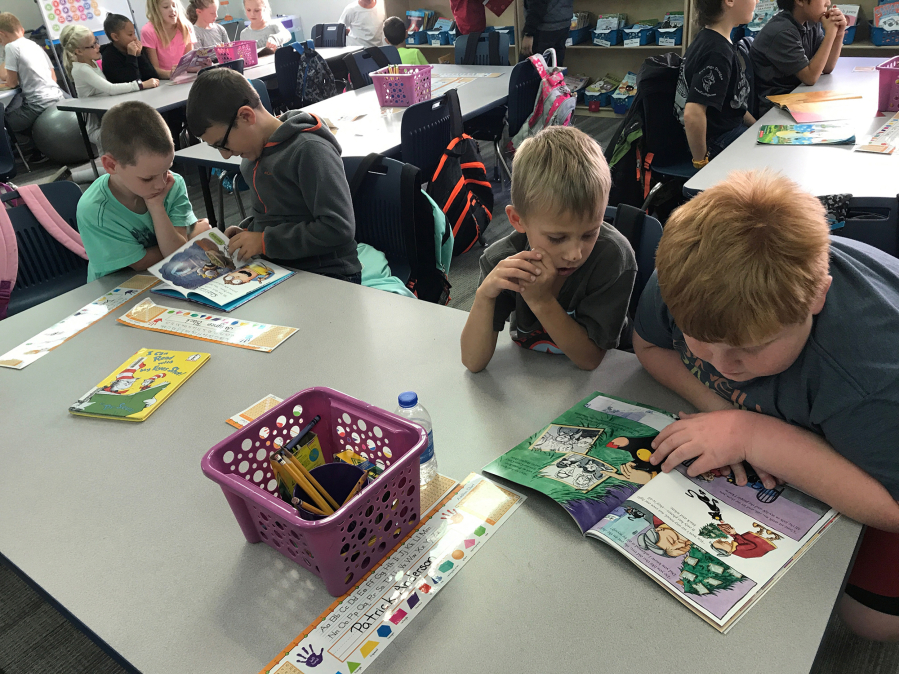 |
| The Columbian (2017) |
At the end of the day, it is still most important to have students read something that they like. Neil Gaiman argues that "well-meaning adults can easily destroy a child's love of reading" (2013), and I would agree with that. Students need to have the agency over what they are reading and how they want to read, in addition to having the motivation to read. E-books and audiobooks, I find, are great for engaging reluctant readers as it allows them to add another layer of depth into their reading experience. And really, it could also be just as simple as having students see the reasons why other children read for them to realize that reading is not "unpleasant" or "uncool" (Gaiman, 2013).
References
Bull, G., Schmidt-Crawford, D.A., McKenna, M.C., & Cohoon, J. (2017, November 10). Storymaking: Combining making and storytelling into a school makerspace. Theory into Practice, 56(4), 271-281.
Du Toit, A. (2017). What is Ms. Chang Reading? [Poster].
Fleming, L. (2014, September). Literacy in the making. Reading Today, 28-29. Retrieved from http://hivenyc.org/wp-content/uploads/LauraFleming_Maker-Movement.pdf
Gaiman, N. (2013, October 15). Why our future depends on libraries, reading and daydreaming. The Guardian. Retrieved from https://www.theguardian.com/books/2013/oct/15/neil-gaiman-future-libraries-reading-daydreaming
Parrott, K. (2017, August 28). Thinking outside the bin: Why labeling books by reading level disempower young readers. School Library Journal. Retrieved from https://www.slj.com/?detailStory=thinking-outside-the-bin-why-labeling-books-by-reading-level-disempowers-young-readers
Scholastic [Scholastic]. (2015, July 23). Kids Tell Us: "Why I Read" [YouTube]. Retrieved from https://www.youtube.com/watch?v=3krHQmOsR44
Well done post exploring and describing all the successes and challenges you've faced in cultivating a strong reading culture at your school. You have many challenges in this environment, trying to encourage students to read appropriate resources at the right level in a second language is very difficult. You have to try many things and some may not work, but some may, as your examples of Reading Mob Day or assessing students reading level to recommend a better book than classic literature. Overall, your post was well done, provided some practical advice and a small glimpse into your overseas school!
ReplyDeleteWhat an interesting observation that assessing students' reading levels increased their desire to read! It makes sense after you explain that they were choosing books that just didn't fit their ability at this time. I have a large population of ELL students in my school and I'm lucky that we have a healthy reading culture. Thanks for the reminder that multimodal texts can help ELL students with comprehension and vocabulary development. I've been showing some of my classes the Raven Tales DVDs and we have just purchased several of the accompanying graphic novels.
ReplyDelete